Nozawa Onsen Travel Guide: Japan's Original Ski & Hot Spring Village

Discover Nozawa Onsen, Nagano's Historic Ski and Onsen Village

Nozawa Onsen was a hot spring village for more than six hundred years before anyone skied there. The settlement appears in written records as Yuyama in 1272. Skiing arrived in the early 1900s. The baths were never built as a resort amenity, and the village still runs them as it always has.

There is a lot here: the village's history, the thirteen free public bathhouses, the Dosojin Fire Festival each January, the ski terrain, the other things to do in Nozawa Onsen, and how to plan the trip. Nozawa Onsen sits in Nagano, not Hokkaido. If the onsen-and-powder combination is what draws you, our Hokkaido resorts share that same tradition, with the skiing and the stay already arranged.

**Key Takeaways **

  • Nozawa Onsen is a working Nagano village with thirteen free public bathhouses, maintained by local families rather than run commercially.
  • The ski area covers 297 hectares on one mountain, with a 1,085 metre vertical and over ten metres of snow a season.
  • The Dosojin Fire Festival falls on 15 January each year and is a nationally designated Important Intangible Folk Cultural Property.

1 - History and Onsen Culture

The History of Nozawa Onsen Village

The village enters the written record in 1272 as Yuyama, and by the early Edo period supported twenty-four inns. Farmers from northern Shinano came in the off-season for tōji, the curative bathing that gave the place its purpose. Skiing arrived in the early 1900s and the village built around both. In 1930 the Austrian instructor Hannes Schneider demonstrated his Arlberg technique here, a turning point for Alpine skiing in Japan

The 13 Free Public Onsen Bathhouses

Thirteen soto-yu sit within walking distance of one another, run by local families known as the Yunakama. There is no entrance fee, only a donation box at each door. Water arrives straight from the source at 45 to 49 degrees in the tubs, hotter than most visitors expect. Wash while seated before getting in, bring your own towel and soap, and remember these are neighbourhood baths first. 

Dosojin Fire Festival: Nagano's Winter Tradition

Held on 15 January every year, the festival is a prayer for protection, good marriages and healthy children. Households where a first son was born that year make a lantern, leaned against a huge timber shrine and burned at the climax. Men in their unlucky years, 25 and 42, defend the structure while the rest of the village attacks it with fire. It has run since 1863.

Nozawana Pickles and Local Onsen Culture

Nozawana is a leaf vegetable that took the village's name. A priest brought turnip seeds from Kyoto in 1756, and in the cold air at 600 metres the root failed while the leaves grew a metre tall. It is harvested in November after the first frost, then salted into barrels. At Ogama, the hottest of the village's springs, ninety-degree water is still used to prepare it.

2 - Skiing, Terrain and Getting There

Nozawa Onsen Ski Terrain and Slopes

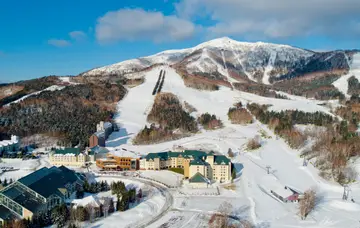
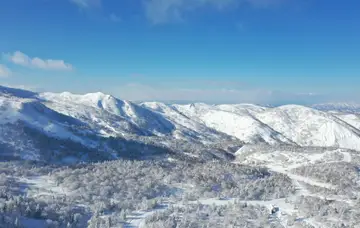
The ski area covers 297 hectares on the northwest flank of Mount Kenashi, rising from 565 metres at the village to 1,650 metres at the summit. That is a 1,085 metre vertical, large by Japanese standards, supporting a linked descent of around ten kilometres. Twenty lifts including two gondolas serve more than thirty-five marked courses, from the eight-degree Karasawa learner run to the 39-degree Challenge wall. 

Things to Do in Nozawa Onsen Beyond the Slopes

The best things to do in Nozawa Onsen happen at walking pace. Night skiing runs on the Nagasaka slope on selected dates, and on 31 December it continues to 11:30pm with fireworks afterwards. Otherwise the village is the activity: narrow lanes, free foot baths, the Japan Ski Museum, and Ogama's steaming kettles, which you watch from a distance rather than enter.

Best Time to Visit for Snow Conditions

The season runs from late November to early May, with the summit area holding longest. January and February deliver about 60 per cent of the annual snowfall. The Japan Meteorological Agency's thirty-year normals record 366 centimetres in January and 282 in February, against 1,087 for the year. February holds the deepest base, while March still averages 170 centimetres with warmer air. 

Getting to Nozawa Onsen from Tokyo

The route is two legs with one change. Take the Hokuriku Shinkansen from Tokyo to Iiyama, then the Nozawa Onsen Liner bus for the last 25 minutes into the village. Iiyama Station opened in 2015, which simplified the connection. From Nagano city a direct 75-minute bus runs on weekends and public holidays only. Check timetables, as bus and train times are not always aligned. 

3 - Planning a Nozawa Onsen Trip

Nozawa Onsen Ski Packages and Accommodation

Accommodation is led by ryokan and family-run guesthouses rather than large hotels, and western-style rooms are limited in peak season. Nozawa Onsen ski packages are usually assembled by travellers themselves: a room, lift passes bought separately, lessons booked with the ski school, and equipment hired in the village. There is a day-care centre and ski school at the Hikage base, both worth booking well ahead. 

Nozawa Onsen for Families and Independent Travellers

The village is steep, with narrow lanes and open canals, so families should know the mitigations. Yu Road, a free covered travellator, carries you from the village up to the Hikage base, where the ski school, day care and a free kids park sit together. Independent travellers get something different: thirteen baths, a stamp trail between them, and a village that still works as one. 

Nagano vs Hokkaido: Comparing Japan's Ski Regions

Both regions sit on the Sea of Japan side and get their snow by the same mechanism. Hokkaido lies around six degrees further north, so its ambient temperatures run lower. Nozawa Onsen sits lower in latitude but higher in elevation, topping out at 1,650 metres. Our guide to Hokkaido's ski resorts covers that side in more detail. 

Where Nozawa Onsen Fits in a Japan Snow Itinerary

Nagano suits travellers who want the cultural half of a Japan snow trip alongside the skiing, and it is straightforward to reach from Tokyo. Many visitors pair Nozawa Onsen ski packages with a few days elsewhere rather than staying put. If you are still working out when to travel, our guide to the Japan ski season sets out how the months differ. 

4 - Discover Hokkaido's Onsen and Powder Culture with Club Med 

Experience Natural Onsen at Club Med Kiroro Grand and Kiroro Peak

Soaking is the thread that links Nozawa Onsen to Hokkaido. Club Med Kiroro Grand has a Traditional Japanese Onsen, listed among its included activities, and it is the family resort of the two. Club Med Kiroro Peak has natural hot springs for guests aged 12 and over. Both sit in the Kiroro area, which records over 20 metres of snow a season, so a soak after a day on the slopes is the natural way to finish.

Terrain and Family Options at Club Med Tomamu and Kiroro Grand

Club Med Tomamu is the largest of our four Hokkaido resorts, with 145 hectares of terrain, wide gentle slopes and Japan's biggest indoor wave pool next door. Club Med Sahoro is the smallest and quietest, set in forest, with an outdoor Canadian bath and a Japanese ofuro among its included activities. Kids Clubs are included for ages 4 to 17 at both. Care for children under 4 is available at selected resorts at extra cost.

Ski-In Ski-Out Convenience and Included Experiences

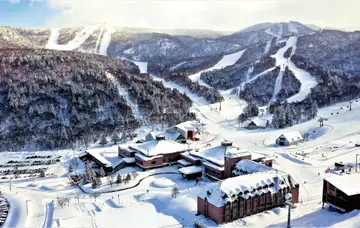
Our resorts sit at the bottom of the slopes, near the ski lifts, so you ski out in the morning and ski back in at the end of the day. Each has a rental shop with locker rooms on site, so nobody carries gear across a village. Lift passes and group ski and snowboard lessons are included. Private lessons and equipment hire carry an additional cost. 

Continue Your Snow Journey with Club Med 

Nozawa Onsen earns its reputation on what it kept: thirteen community baths, a January fire ritual running since 1863, and a mountain the village has skied for a century. If that combination of onsen culture and deep snow is what you are after, you will find the same tradition in Hokkaido, with accommodation, dining, lift passes and group lessons already arranged. 

Discover Hokkaido's onsen and powder culture with Club Med across our four Japan ski resorts. 

Discover our resorts

See all resorts

Frequently Asked Questions

Discover more about Club Med

Our most popular resorts